

How My Mind Works
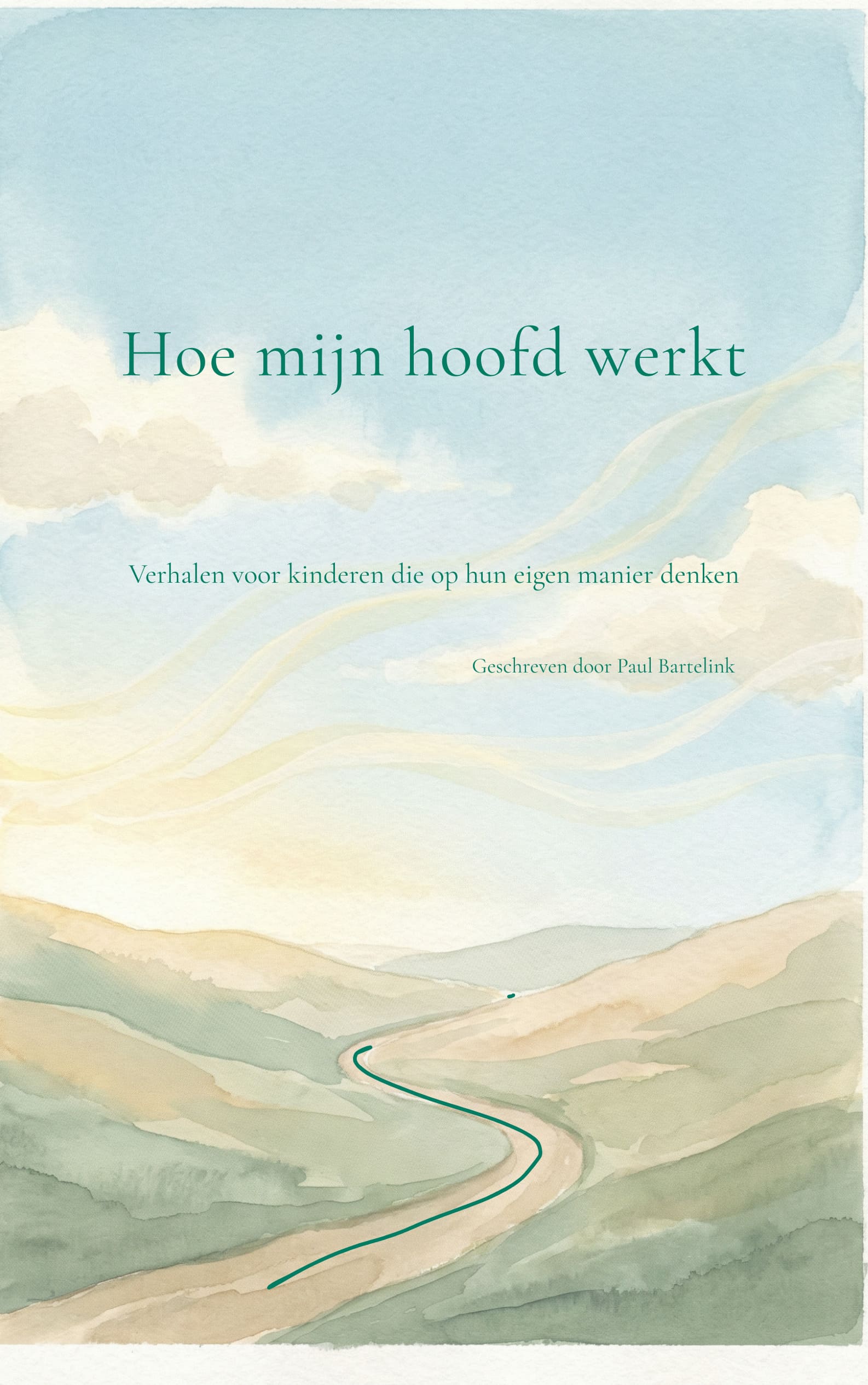
Others think more deeply.
Or more broadly.
Or differently.
How My Mind Works It's not about being smart. Nor is it about right or wrong. It's about how thinking feels. It's about children who ask questions that don't always have a quick answer, who see things that others don't immediately notice, or who sometimes get stuck precisely because they think more deeply.
This book is written for children who find that their way of thinking doesn't always fit within established explanations or rules—and for parents, caregivers, and mentors who want to understand them better.
Five children. Five ways of looking.
Sam
Karlijn
Milo
Noor
Timo
These are definitely not boxes that a child has to fit into.
A child can identify with multiple ways of thinking. That identification can change and overlap. A child is always more than just one way of thinking.

No test. Just discovery.
Each story is followed by a reflection exercise, discovery questions, short activities, and opportunities to talk together. There’s no need for anything to “come out” of it.
There is no score.
No standard.
No right or wrong.
The questions are meant to encourage looking, feeling, and thinking—not to prove anything. That’s why the book doesn’t have to be read from cover to cover. A child can read just one story, skip a page, just look at the pictures, talk about it together, or simply close the book for a moment.
Why I Wrote This Book
What interests me is not just what someone does, but above all what's going on underneath the surface.
Why does one person see something that another person doesn't?
Why does one child need a clear structure, while another needs more freedom?
Waarom lijkt een kind soms af te haken, terwijl het in zijn hoofd misschien al veel verder is?
How My Mind Works It arose from that curiosity.
Not to explain to children who they are. Not to tell parents what to do. But to create space to see things differently, listen more closely, and discover together. That premise is also literally reflected in the book: looking without immediately understanding, listening without immediately solving, and making space without letting go.


Understanding is not the end goal
A person grows. Questions change. What feels right today may feel different tomorrow. That is why this book does not attempt to provide definitive answers.
Maybe a child will recognize themselves in it. Maybe a parent will suddenly see their child from a different perspective. Maybe it will just spark a good conversation. That, too, is enough.